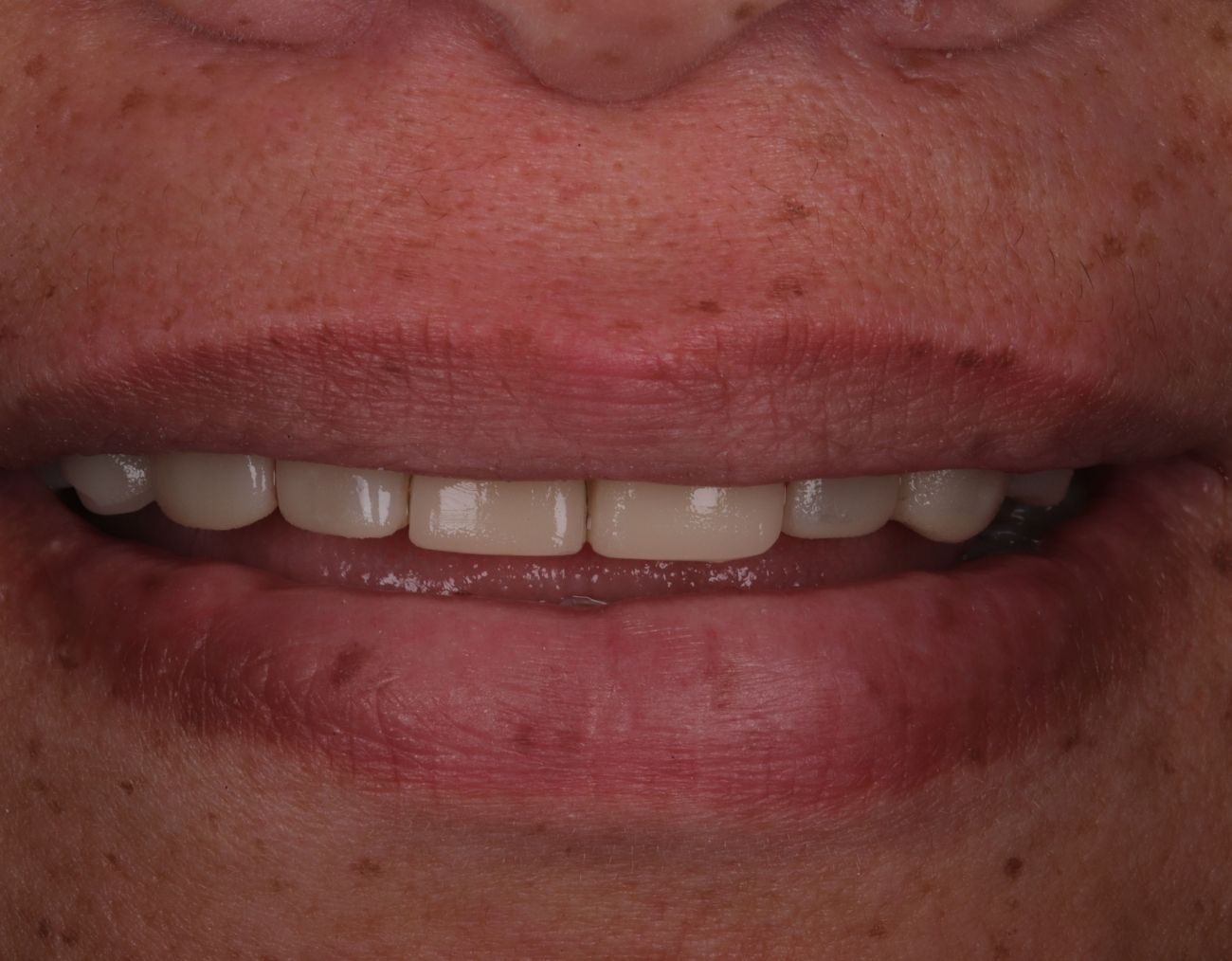
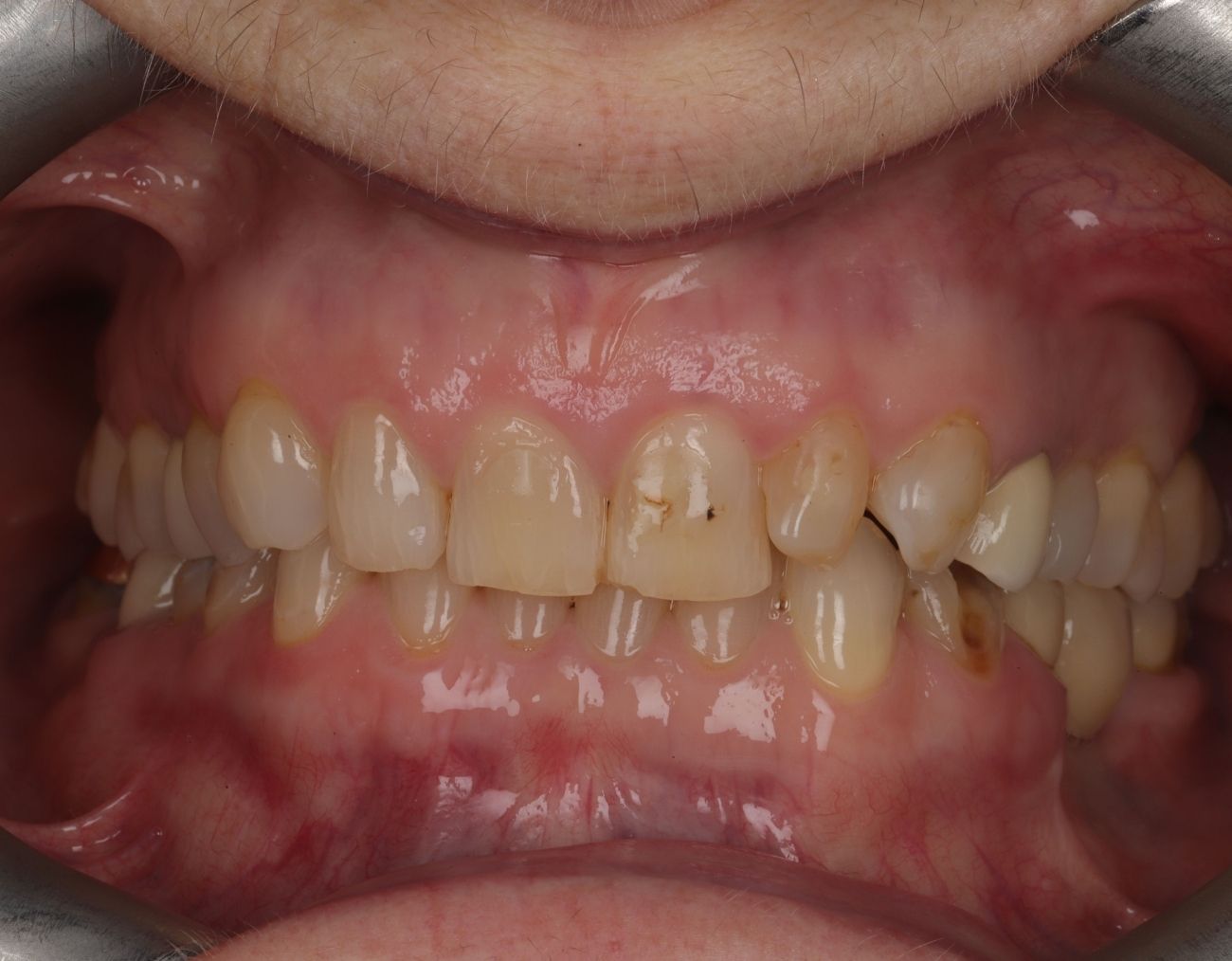
The Only Time You Can Have Composite Bonding for Crooked Teeth
Composite bonding for crooked teeth will only work in a few scenarios. Because it’s not designed like orthodontics to move the teeth, but rather to mask imperfections.
Composite bonding is a great, one-day, affordable treatment – and it can be a quick fix for crooked teeth, but only in very special circumstances.
Quick overview:
- Composite bonding does not move teeth
- It camouflages crooked teeth
- Using it incorrectly leads to bulky and unnatural results
- It only reshapes and disguises minor issues
- It’s only suitable in very specific crooked teeth cases

Is composite bonding suitable for your crooked teeth?
Composite bonding works best in crooked teeth cases when the issue is minor and cosmetic.
As our cosmetic dentists use composite to build out areas of the tooth to create the illusion of straighter teeth, it’s important that the overlap is minimal; otherwise, the results can look bulky.
It will typically work for you if you have:
- Slight overlapping on a few teeth
- Slightly rotated teeth
- Mild crookedness
- Minor spacing or gaps
- Uneven edges or tooth shape
- Teeth that are mostly straight but not perfectly aligned
The key requirement is that the teeth are already close to straight!
Upload a photo of your crooked teeth, and we’ll let you know if you’re suitable for composite bonding treatment at our clinic in Surrey.
Braces & bonding together:

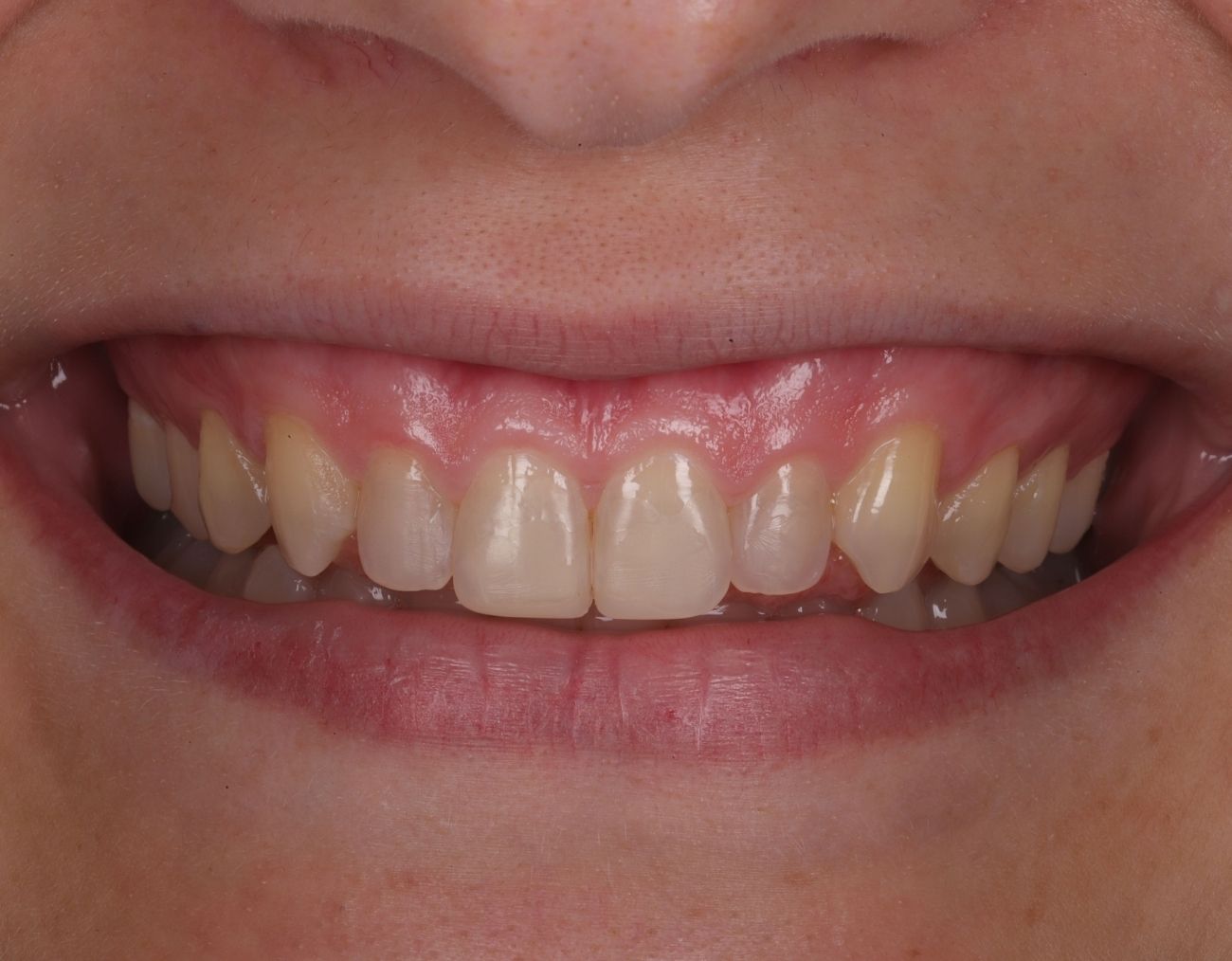
When composite bonding won’t work
Your crooked teeth case won’t be suitable when there is:
- Major overlapping on several teeth
- Moderate to severe crowding
- Teeth that stick out significantly
- Bite issues (overbite, underbite, crossbite)
- Twisted teeth needing rotation
Composite bonding won’t be the right treatment in these cases because too much material would be required to make the teeth appear straight, leading to oversized or unnatural-looking results. In more severe cases, orthodontic treatment is likely to be more effective.


See more veneer before & afters.
If your case is minor, here’s what to expect from composite bonding
- Composite bonding uses a tooth-coloured resin to reshape and resize the teeth, making it a good option for minor misalignment.
- It’s applied in layers to specific areas of the teeth to rebalance the appearance. By padding out certain edges and surfaces, teeth can appear straighter without movement.
- Patients should be over 18 and present with mildly crooked or uneven teeth. General good oral health is recommended.
- The procedure is minimally invasive, typically involving no drilling or injections, and is performed, shaped, and polished in a single visit.
- The results are immediate and typically last up to 10 years. Composite bonding will require upkeep and renewal over time.

The cost of composite bonding
The cost of composite bonding for crooked teeth starts from £250 per tooth, with patients typically spending around £500 for the procedure.
Dental finance is available from 12-60 months, with the first 12 months being interest-free, which means you can pay £41 per month over 12 months with no additional cost of credit.
Next: Bonding vs Veneers, Which is Better for Surrey Patients?